Sound Bridge: You moved from Tokyo to Shiretoko in 2020. What led you to make that transition, and how did it influence your work as a sound artist?
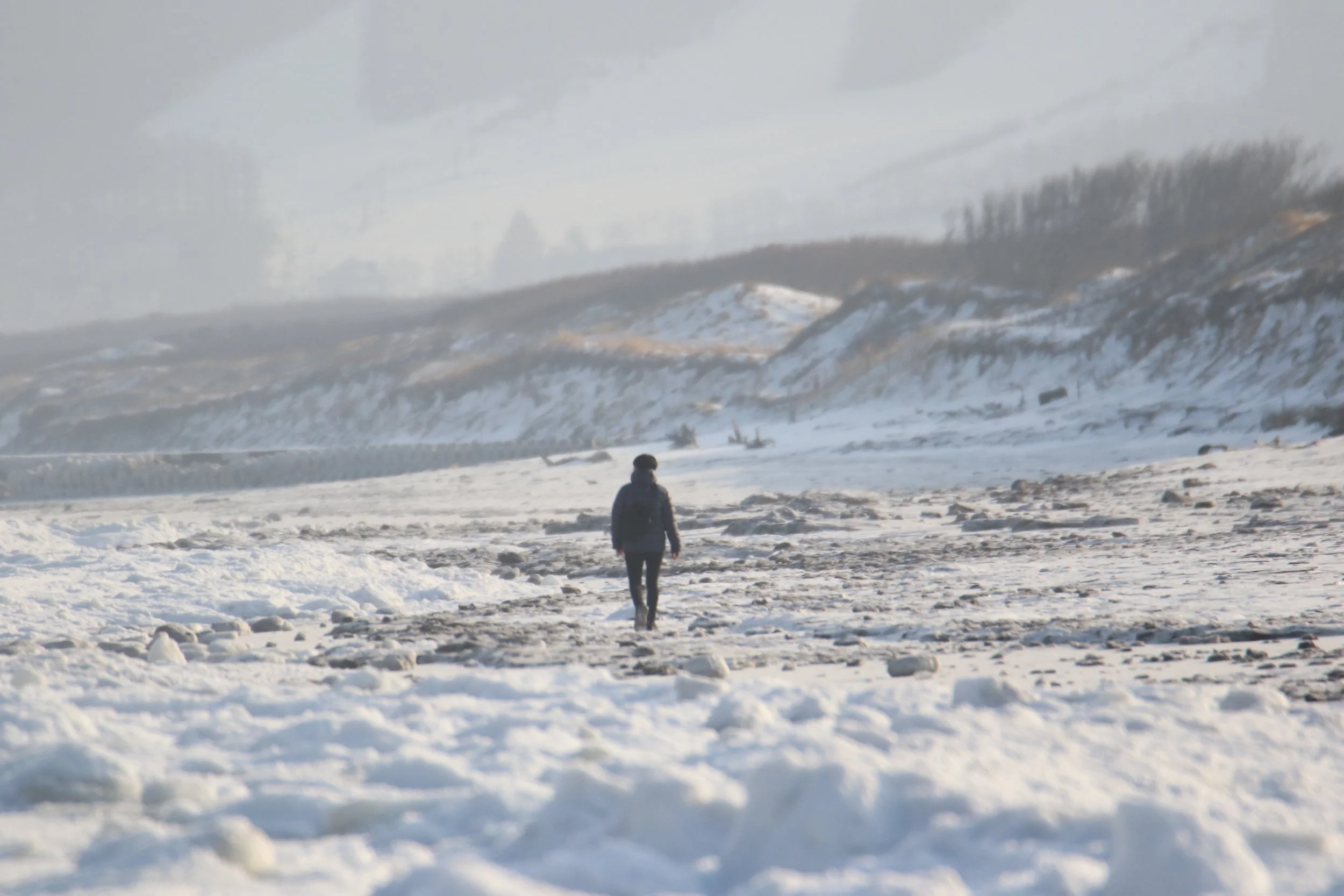
Airda: At first, I didn’t think about it in terms of art. I just wanted to live somewhere quieter, away from the rhythm of the city. Shiretoko felt almost otherworldly — surrounded by wilderness, the sea, and animals. But once I settled here, I realized the environment itself had a kind of presence that shaped how I listen and how I create sound. It wasn’t about escaping the city; it was about tuning into a different kind of time and space.
SB: How did the natural environment begin to enter your sound practice?
A: It started very simply. I began recording the sound of wind and waves outside my house, or the calls of birds I couldn’t identify. I wasn’t trying to make “field recordings” in the academic sense. I was just curious about what the world sounded like here.
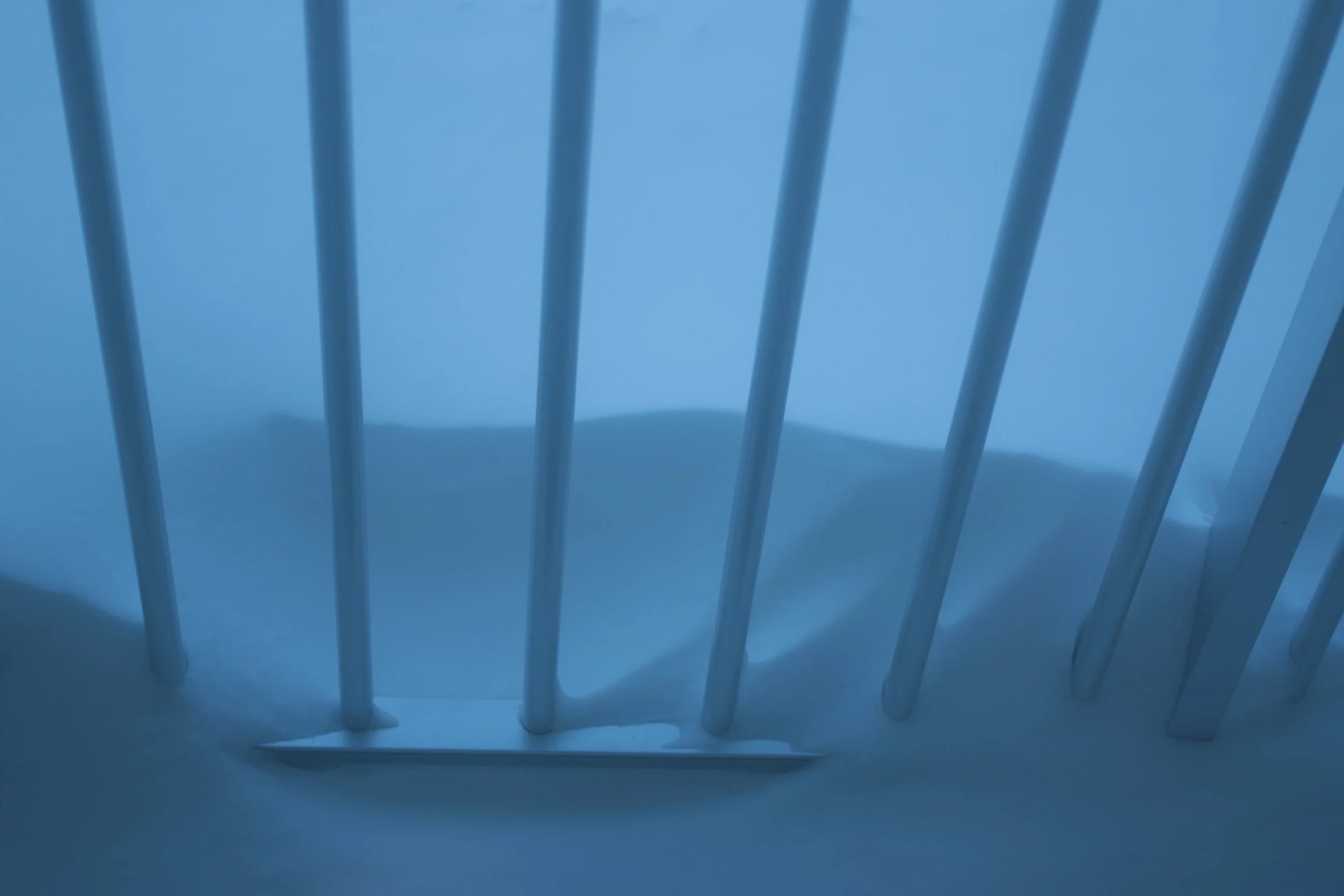
Over time, I began to notice how those sounds interacted with silence — the way the sea would fade in and out depending on the weather, or how snow could completely absorb sound. It became a kind of collaboration between the environment and my listening body.
SB: Shiretoko is known for its vast, untouched landscapes, but also for its harsh conditions. How does that duality affect your approach to sound?
A: It’s a place of beauty, but it’s not gentle. The cold can be extreme, and the sense of isolation is real. But those conditions make you aware of how fragile and temporary everything is — including yourself.
In Tokyo, I used to think of sound as something I produced or captured. Here, I’ve learned to think of sound as something that emerges and disappears, depending on how you’re listening. The environment doesn’t wait for you to record it. You have to be ready when it speaks.
SB: You’ve mentioned before that living in Shiretoko changed your understanding of “environmental sound.” What do you mean by that?
A: We often imagine “environmental sound” as something external — like the sound of nature or the noise of a city. But being here, I started to realize that environment isn’t just what surrounds you. It’s what you are part of.
The sound of your footsteps in snow, the hum of electricity in your cabin, the rhythm of your breath when you’re cold — all of that is part of the same environment. There’s no clear boundary between inside and outside. Once you start to hear that, your perception of sound completely changes.
SB: That’s very close to the concept of embodied listening. Would you say your practice has become more performative in that sense?
A: Maybe. I don’t think of my work as performance, but it’s definitely more physical now. Recording, for me, is no longer about capturing a perfect sound — it’s about being present in a specific time and place.
Sometimes I go out to record and come back with nothing. The act of being there, listening, and waiting — that’s already part of the work. It’s not about what I bring back; it’s about what changes in me during that process.
SB: Can you tell us a bit about how you document or present these experiences?
A: I keep recordings, of course, but I also keep notes — almost like a journal of sounds. Not in musical notation, but in words: the temperature, the feeling in my body, what I was thinking about.
When I present the work, I like to create a space where listeners can experience that sense of immersion without needing the whole backstory. Sometimes it’s an installation, sometimes just a listening session. I want people to feel the same uncertainty I feel when I’m in the field — something between recognition and disorientation.
SB: How does community factor into your work now?
A: At first, I was isolated. I didn’t know anyone, and people here didn’t really understand what “sound art” meant. But gradually, I started participating in local activities, joining small events. Through those experiences, I realized that sound is also a form of communication.
When you listen carefully to someone’s environment, you start to understand their life. I’ve learned a lot from people here, even if we don’t talk much. Their relationship with land and sea is very direct, very respectful. That’s something I try to bring into my work as well.
SB: Has your sense of time changed since moving there?
A: Completely. In the city, time feels linear and scheduled. Here, it’s cyclical and unpredictable. The rhythm of the seasons dictates everything. You can’t plan around it — you have to adapt.
That’s also true for sound. There are periods when everything feels quiet, almost empty, and then moments when the whole landscape becomes alive. It’s like breathing. You can’t force it; you just move with it.
SB: Do you still think of yourself as a composer or sound artist, or has that definition shifted?
A: I still use those words, but they feel less important now. What matters more is the practice of listening. Whether it’s composition, installation, or collaboration — it all comes back to that act of attention.
Labels can be useful when communicating, but they also limit perception. I’d rather think of myself as someone who listens and responds, not someone who defines or controls.
SB: The Sound Bridge project often explores the idea of “connection through sound.” How do you interpret that phrase in your own work?
A: I think sound connects us because it’s something we share without owning it. When you hear a wave, that sound belongs to no one. It’s a temporary bridge between you and everything else around you.
For me, Sound Bridge is not just a metaphor — it’s a method. By listening across distances, we can understand each other in ways that language can’t reach. The sound doesn’t need translation. It just travels.
SB: Do you think technology helps or hinders that kind of connection?
A: Both. Technology allows us to record, share, and collaborate across space, which is beautiful. But it can also make us passive. If we rely too much on devices, we stop using our own senses.
I try to use technology as a tool, not a substitute for experience. The microphone is an extension of my ear, not a replacement. When I record, I remind myself that the real work is happening before the red light turns on.
SB: What’s next for you?
A: I’m working on a new project that connects Shiretoko with other coastal regions through sound. It’s about listening to the ocean as a continuous entity — how different places share the same sonic body. I’m also interested in creating workshops that encourage local people to record their surroundings, not for art but for awareness. I think everyone can benefit from listening more deeply to where they live.
SB: Finally, what does “listening” mean to you now?
A: It means humility. To listen is to accept that the world is larger than you. It’s an act of respect and curiosity at the same time. When I listen, I’m reminded that sound is not just vibration — it’s relationship. Between people, between species, between earth and air. That, to me, is what makes sound so powerful.